App State economics faculty member Dr. Kyung Hwan Baik and Dr. Dongwoo Lee (Kyung Hee University) have published "Sabotage and Free Riding in Contests with a Group-Specific Public-Good/Bad Prize" in the Journal of Public Economic Theory.
The study indicates that equilibrium behavior depends on incentives: either the highest-valuation group member invests in helping the group win, or the lowest-valuation member engages in sabotage to prevent winning, highlighting how internal group conflicts shape contest outcomes.
Abstract
We study contests in which two groups compete to win (or not to win) a group-specific public-good/bad prize. Each player in the groups can exert two types of effort: one to help her own group win the prize, and one to sabotage her own group's chances of winning it. The players in the groups choose their effort levels simultaneously and independently. We introduce a specific form of contest success function that determines each group's probability of winning the prize, taking into account players' sabotage activities. We show that two types of pure-strategy Nash equilibrium occur, depending on parameter values: one without sabotage activities and one with sabotage activities. In the first type, only the highest-valuation player in each group expends positive constructive effort, whereas, in the second type, only the player with the lowest valuation (that is negative) in each group expends positive sabotage effort.
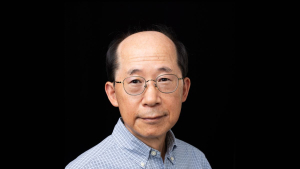
Dr. Kyung Hwan Baik
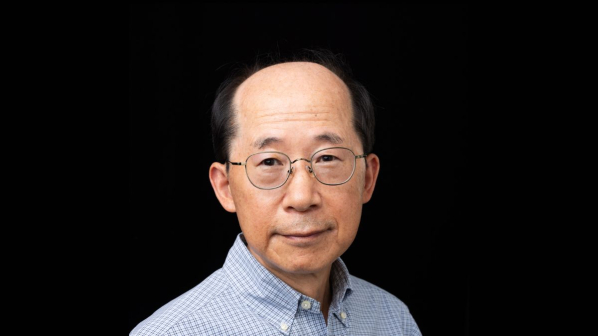
Baik